If you’ve ever tried to budget for a 3PL and walked away with more questions than answers, you’re not alone. Most fulfillment pricing pages give you a vague “contact us for a quote” instead of real numbers. This guide breaks down actual ecommerce warehouse cost in Canada, storage, receiving, and pick and pack, so you can plan a real budget before you sign anything.
Canadian Fulfill draws on 25+ years of logistics experience through its parent operation EFS. That means pricing guidance built on real Canadian warehouse operations, not generic industry averages. That matters because so much pricing information online is outdated, or borrowed from US markets that don’t match Canadian rates.
What Drives Ecommerce Warehouse Cost in Canada
Warehouse cost isn’t one line item. It’s a mix of storage, receiving, and pick and pack, and each gets billed differently. Understanding these buckets separately is the first step to an accurate budget.
Storage vs. Fulfillment: Two Different Cost Buckets
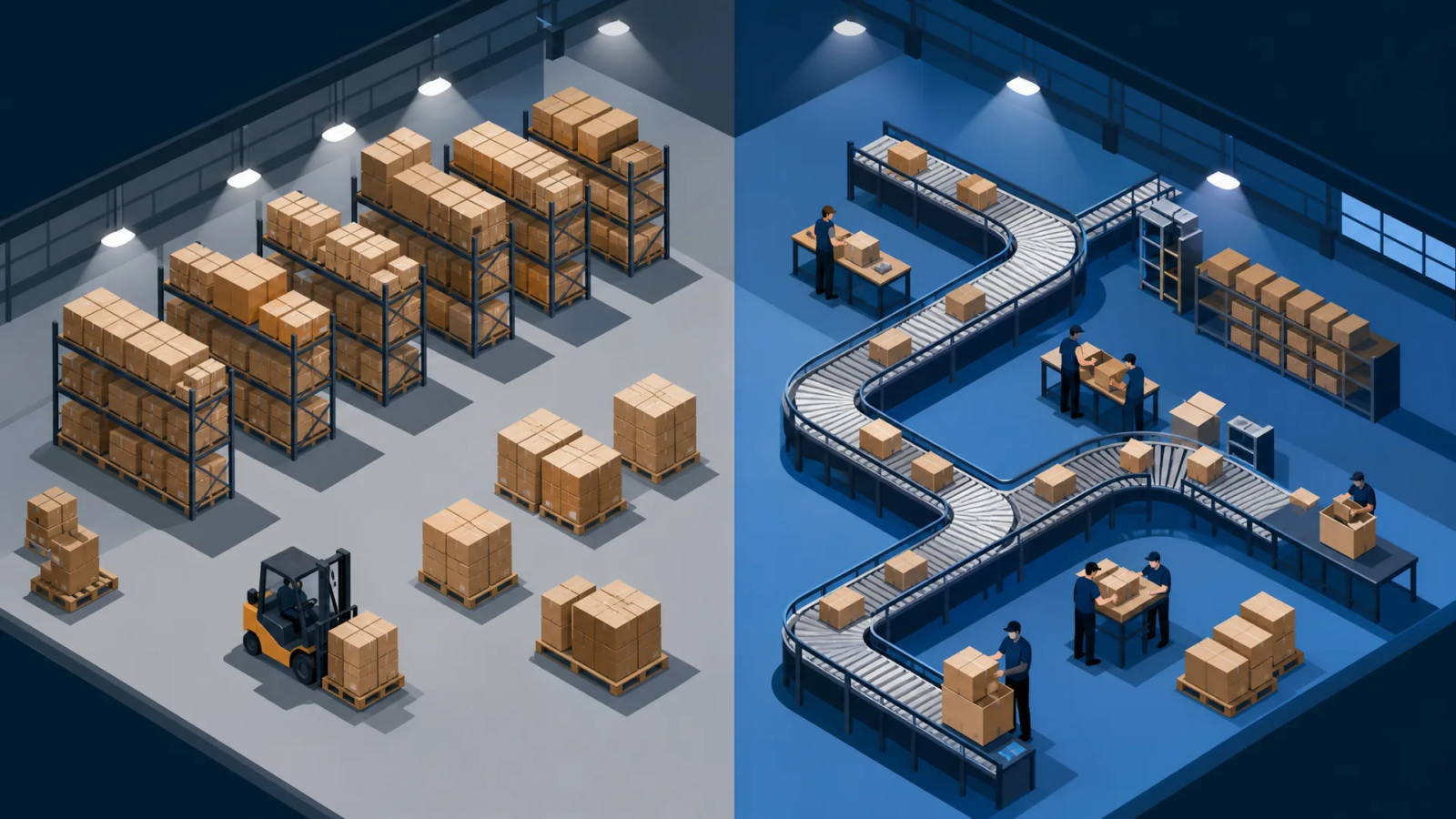
Storage is what you pay to keep inventory sitting on a shelf or pallet. Fulfillment is what you pay every time someone orders something and that inventory has to move. A brand with slow-moving, bulky inventory leans heavier on storage costs. A brand with high order volume and fast-moving SKUs leans heavier on fulfillment costs.
Most 3PL quotes bundle these together. That makes it hard to tell where your money actually goes. Ask for a line-item breakdown before you commit to a contract.
Why Location and Order Volume Change Your Rate
Canadian geography plays a bigger role in warehouse cost than most merchants expect. Space in major metros like Toronto or Vancouver generally costs more than in smaller logistics hubs. Real estate and labor both cost more in those markets.
Order volume matters too. Higher volume gives a 3PL more efficiency per order, which usually means better per-unit pricing for you. This is one reason quotes vary so widely between providers. They’re not just pricing your space. They’re pricing your entire order profile.
Warehouse Storage Cost in Canada: Pallet, Bin, and Cubic Foot Pricing
Storage is usually the easiest cost to estimate once you know your unit count and packaging. But the billing structure changes what you actually pay.
Typical Storage Pricing Models
Warehouse storage in Canada is typically billed per pallet, per bin, or per cubic foot per month, and pricing varies by region. Pallet pricing is common for bulkier goods and works well for brands with palletized inbound shipments. Bin pricing suits smaller-item brands that don’t need a full pallet position. Cubic foot pricing gives you the most granular control, which helps if you carry irregular SKU sizes.
None of these models is inherently cheaper. The right one depends on how your inventory is packaged and how fast it moves.
How to Estimate Your Monthly Storage Spend
Start by counting how many pallets or bins your current inventory fills. Then multiply by the going rate for your chosen billing unit, adjusted for your region. If you’re storing 500 SKUs across two pallets, your storage line item will look very different from a brand storing that same SKU count across twenty pallets of slow-moving stock.
A useful gut check: if your storage cost is climbing faster than your sales, you likely have too much slow-moving inventory tying up space. That’s a signal to review reorder quantities, not just switch 3PLs.
Fulfillment Pricing in Canada: Receiving, Pick and Pack Costs
Fulfillment pricing in Canada usually splits into two parts: getting inventory into the warehouse (receiving) and getting orders out (pick and pack). Both get billed separately from storage.
Receiving and Inbound Fees Explained
3PLs often charge receiving and inbound fees per carton, per pallet, or per hour of labor. Many Canadian 3PLs waive or discount these fees for higher-volume or long-term storage clients, so ask directly rather than assuming the quoted rate is fixed.
Are receiving and inbound fees included in warehouse storage pricing? Usually not. They’re a separate line item tied to how your inventory arrives, not how long it stays. A shipment that arrives loose and unpalletized will typically cost more to receive than one that arrives pre-palletized and labeled.
Pick-and-Pack Fee Structures
3PLs usually quote pick-and-pack fees as a base rate per order plus a per-additional-item fee. So a single-SKU order costs noticeably less to fulfill than a multi-item bundle. This structure rewards simple order profiles and penalizes complex ones. That’s why subscription boxes with many small items often pay more per order than single-product stores do.
Packaging materials, custom inserts, and special handling (fragile items, kitting) usually add to this base structure rather than replacing it. Always ask whether a quote includes packaging or bills it separately.
3PL Pricing Breakdown: Sample Monthly Cost Scenario for an SMB
Real numbers help more than percentages, so here are two illustrative scenarios. Treat these as planning estimates, not quoted prices. Your actual rate depends on your provider, region, and contract terms.
Low-Volume Store Example
A small apparel brand storing 500 SKUs across two pallets sees a very different cost structure than a subscription box company shipping hundreds of small parcels daily. Cost drivers like pallet count, pick complexity, and order volume matter more than revenue size.
For this low-volume brand, monthly costs typically break down into a modest storage fee for two pallets, a small receiving fee for periodic inbound shipments, and pick-and-pack fees scaled to a lower order count. Order volume is low, so the fulfillment portion of the bill stays manageable even if per-order rates aren’t the lowest available.
Growing Store Example
A growing store shipping several hundred orders a month, spread across more SKUs and more pallets, sees storage costs rise with pallet count. But per-order pick-and-pack rates often improve slightly as volume increases, since 3PLs can process orders more efficiently at scale.
This is the scenario where negotiating leverage starts to matter. A growing store has real volume to offer a 3PL, and that volume is worth trading for better per-unit pricing.
How to Lower Your Cost to Store Inventory in Canada
Lowering your cost to store inventory in Canada isn’t about finding the cheapest 3PL on paper. It’s about matching your contract to your actual shipping profile, and refusing to overpay for space or handling you don’t need.
Negotiating Volume Discounts
Most 3PLs have room to negotiate once you can show consistent order volume or committed pallet space. Bring real numbers to the conversation: your average monthly order count, SKU count, and typical inbound shipment size. Providers can price more competitively when they know exactly what they’re quoting against, instead of padding a rate to cover uncertainty.
Avoiding Hidden Fees in 3PL Contracts
The biggest budget surprises usually come from fees that aren’t in the headline quote: minimum monthly charges, storage overage penalties, or per-return processing fees. Ask for a full fee schedule before signing, not just the storage and pick-and-pack rate.
Comparing affordable 3PL options for small businesses side by side, line by line, is the only reliable way to spot these gaps before they hit your invoice. For a broader look at how fulfillment pricing works across providers, an SMB fulfillment pricing guide can help you compare structures beyond a single quote.
Getting an Accurate Fulfillment Quote for 2027
The fastest way to get an accurate quote is to walk in with real numbers instead of estimates. Have your SKU count, average monthly order volume, and typical box or pallet dimensions ready. The more specific your inputs, the more specific, and useful, your quote will be.
If you’re comparing providers for 2027 budgeting, start with warehousing services built for growing stores or explore full ecommerce fulfillment services to see how a real cost breakdown compares to what you’re paying now. Get a custom quote and see exactly where your money goes. No vague pricing pages, just numbers you can budget against, so you can scale fearlessly.
Add a Comment