1.01-MyFBAPrep-1200x628-AMM-62952-2048x1072

How to Start Selling on Amazon Canada

Why sell on Amazon Canada

Selling on Amazon Canada offers many advantages, no matter where your business is based. Below, we highlight some of the top benefits of expanding into this marketplace to show you how this move can take your brand to new heights.

1) More opportunities

Amazon.ca garners a noteworthy 15.9 million unique visitors each month. This provides a new opportunity to showcase your products to a fresh market of buyers. Plus, with a lower number of sellers than Amazon.com, you have a higher chance of gaining more listing views and conversions.

Amazon Canada is also showing signs of rapid growth in the market, which makes jumping in early all the more important. With a smaller market size (and therefore less competition within Canada), this is a unique opportunity to grow your brand.

2) Diversify your revenue streams

One of the obvious benefits of expanding your sales to Canada is that it diversifies your revenue streams, but with less risk since you stay on the North American continent rather than going overseas.

Additionally, Canadians share many of the same consumer needs and interests as their southern neighbors, so it’s easier to break into their market.

The significant market and cultural overlap between Canada and the U.S. simplifies marketing and advertising efforts in Canada since you can employ many of the same methods you do at home. In addition, geographic proximity is a major bonus, as it reduces delivery times and saves on fulfillment costs.

3) Increase revenue

Tapping into a new market all but guarantees more revenue for your business. Also, if you use the North American Remote Fulfillment (NARF) program, you already have an idea of your demand in the Canadian market.

By transitioning to Canadian FBA, you can reduce your business expenses and increase listing conversions.

4) Optimize ad spend

We have noticed sellers who use NARF alone see lower conversion rates when advertising in Canada and Mexico. This results in a higher advertising cost of sales (ACOS) and a lower return on advertising spend (ROAS).

By selling on Amazon.ca and having inventory within Canada, you can help boost your ROAS thanks to domestic inventory that’s eligible for Prime-speed shipping. This helps your ad dollars go further while also boosting your customer experience.

5) Open inventory limits

Amazon U.S. and Amazon Canada have separate, unrelated FBA inventory limits. Therefore, expanding to Canada allows you to have more inventory on hand that’s ready to sell. You can also optimize inventory allocation in each region independent of one another.

6) Greater brand valuation

Establishing and growing an international presence will boost your brand’s value in the long term.

One of the factors that Amazon aggregators should consider when buying a brand is expansion opportunities. Having an international footprint shows that a brand does well across different markets and has a flexible supply chain.

Expanding to Canada and beyond will help your brand become a global name, and thus drive more sales from multiple markets.

7) Less competition

Depending on your niche, you may have few competitors in Canada, or the competition may fail to take full advantage of the Canadian market.

For those competitors who are already in Canada and enjoy a market share, use their presence to your advantage: You can analyze their success to gauge how high demand is for your niche. Then you can begin to carve out your own market share by introducing your products so Canadians have greater choice.

How to launch your store on Amazon Canada

If you’re on the southern side of the border, it may seem daunting to get started in Canada. Below, we outline some simple steps to make the process as seamless as possible.

1) Establish your business

As an international seller, you can make your life significantly easier by creating an Amazon North American Unified account. This account allows you to switch smoothly between amazon.com, amazon.ca, and amazon.mx in the seller central. This will simplify your processes for listing products and managing orders in each country.

A Unified account lets you do the following in each North American market:

  • Share listing info and manage inventory
  • Track orders
  • Access tools
  • Manage single monthly subscriptions
  • Accept local currency payments

You should also consider hiring an Amazon Canada consultant to ensure your northward expansion goes smoothly. Amazon Canada consultants and agencies are experts in selling and marketing in Canada and have the best tools and tricks to help you establish your business in this market.

2) Canadian taxes

When you sell products in Canada, you’re responsible for paying taxes, duties, and customs clearance fees when applicable. This includes federal and provincial sales taxes, which vary for each province and territory (as outlined in the table below).

Provincial and territorial tax rates in Canada

Make sure you understand the non-resident importer (NRI) requirements as well. These are legal requirements for sellers located outside of Canada who import goods for sale in the country.

The first importer requirement you should obtain (and one of the most significant) is a business number from the Canada Revenue Agency.

This is what allows you to operate as a business within Canada. Without it, you risk being shut down and fined, and you may lose out on the inventory and processes you’ve already set up in the country.

3) Inventory management

To simplify inventory management, make sure you use the right SKUs for your needs.

You should employ a global SKU if you ship your own orders to a variety of countries. Use marketplace-specific SKUs if you have distinct inventory pools in each country.

4) Importing inventory to Canada

Importing inventory to Canada from the U.S. can be costly since you have to pay customs for inbound transportation to the U.S., then pay Canadian customs when you export to Canada. To cut down on expenses, see if you can ship your products directly to Amazon FBA fulfillment centers in Canada from your own warehouse in the U.S. or China. This will help you avoid an assortment of intermediate shipping fees.

However, you can only ship to an FBA center if you meet all FBA labeling compliances. This may cause difficulties if you don’t have a Canadian return address in case the shipment is rejected. A workaround for this is either to establish a Canadian address by leasing space or use a Canadian fulfillment partner’s address.

5) Fulfillment and returns

Fulfillment

As mentioned previously, you can ship inventory directly to FBA fulfillment centers in Canada. If you opt for this route, it’s helpful to use a Canadian third-party logistics (3PL) partner to receive your inventory and forward it to these centers. When you first get started in Canada, you’ll have small inventory limits, so it’s best to use a 3PL to drip-feed inventory to Amazon.

3PLs within Canada can handle FBM there if you prefer having more control over your fulfillment processes. 

Returns

Returns from Canadian customers will need to be routed to a Canadian address. If you partner with a Canadian Amazon 3PL, they’ll be able to receive and process returns for you. If not, you’ll need a Canadian address such as a warehouse leased directly or with a partner.

6) Advertising in Canada

Another area that has far less competition in Canada than the American market is advertising. Fortunately, setting up your Amazon Canada ads is simple, since all ad placements are the same in the Canadian market.

It’s worth noting that ROAS is generally higher in Canada, and CPC is lower than it is in the U.S. Despite the similarities though, Canadians are fundamentally a different breed of customer than their American counterparts. Make sure your marketing efforts reflect this by taking into consideration their differences in culture, tastes, and values.

An important example is your use of spelling differences, such as “color” versus “colour” and “gray” versus “grey.” Implementing American spelling will mark you as foreign and may annoy potential customers. Consider hiring a local agency to help optimize your advertisements for the Canadian market.

Canada’s larger variance in weather is another important factor to keep in mind, as it impacts product and advertising needs. For example, unlike countries with mild climates, many parts of Canada see cold snowy winters. That means it’s not the time to advertise light jackets or patio furniture.
21486750391222

Essential Guide: How to Prep Your Products for FBA Success in Canada

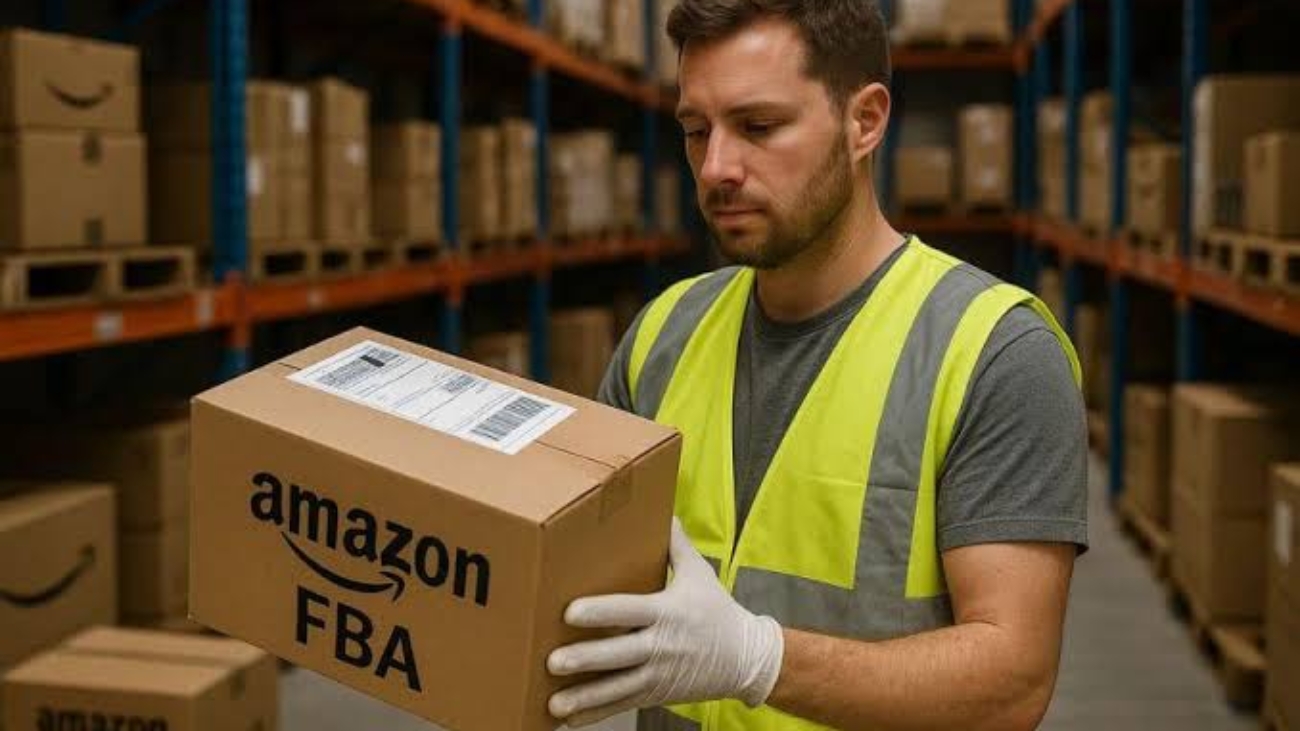
Proper product preparation is crucial for a smooth FBA experience. As an Amazon seller, understanding and following the right prep requirements helps ensure your inventory arrives safely at fulfillment centers and is ready for customer orders. Let’s break down the key things you need to know about FBA prep.

Why Proper Prep Matters?

When you send inventory to Amazon fulfillment centers, it needs to arrive in a condition that allows for safe handling by Amazon associates and proper storage. Poor preparation can lead to damaged products, handling issues, and unexpected fees. Getting prep right from the start helps protect both your inventory and your bottom line.

Common Prep Requirements by Product Type

Different products need different types of preparation:

• Fragile/Glass Items: Require bubble wrap or protective overboxes

• Liquids and Powders: Must be poly bagged to prevent leaks

• Apparel/Textiles: Need poly bagging or shrink-wrap to stay clean

• Adult Items: Must use opaque bags

• Small Items (under 2 1/8 inches): Require transparent poly bags

• Baby Products: Have specific safety packaging requirements

Don’t Want to Handle Prep? Amazon Can Help

If you prefer not to manage product prep yourself, Amazon offers FBA Prep Services for a per-item fee. While this can save you time and effort, remember that you’re still ultimately responsible for ensuring products arrive safely packaged.

Pro Tips for Success

• Review prep requirements carefully before shipping

• When in doubt, err on the side of more protection

• Factor prep costs into your pricing strategy

• Consider whether Amazon’s prep service makes sense for your business

• Keep up with any requirement changes through Seller Central updates

The Bottom Line

While prep requirements may seem complex at first, they exist to protect your products and ensure efficient handling. Taking time to understand and follow proper prep guidelines helps avoid delays, damage, and additional fees while setting your FBA business up for success.

You can see visit our help page, Prepare your products for Fulfilment by Amazon shipping for additional information

Have questions about prepping specific products? Share them below and fellow sellers can help provide guidance based on their experience.

images (17)

Drayage for Amazon FBA and Ecommerce Sellers: Costs, Timing, and How to Keep Inventory Moving

Drayage is the transport of shipping containers between ports, rail terminals, warehouses, and fulfillment centers. It is the final 10 to 50 miles after ocean or rail transit. Like the final mile but for inventory as a whole.

For Amazon FBA sellers, drayage is the link between the port and the prep center. That short leg often decides how fast your stock reaches Amazon.

I talk to ecommerce brands that do everything right on the front end. They negotiate factory pricing. They book ocean freight. They prep their Amazon shipments and build clean forecasts.

Then the container lands, and a new stack of invoices shows up. Port storage. Demurrage. Detention. Appointment fees. Container waiting charges.

Most of those costs are the final mile often ignored. Here is how drayage works, what it really costs, and how to keep your containers moving.

What Is Drayage

If you have searched ‘what is drayage,’ you have probably found definitions packed with logistics jargon. The idea is simpler than that.

Picture your products made in Vietnam. Your supplier loads them into a 40-foot container/ 20-foot container. That container journeys three to four weeks crossing the Pacific and lands at the Port of Los Angeles. Well, the ship’s job is done. But, your inventory is nowhere near Amazon. Put it simply, the inventory arrived in the country, but you might be at the opposite end of where the container arrived.

Someone has to move that container from the port to its next stop. That short move is drayage. Without it, the container sits at the terminal while storage charges climb.

What Does the Word Drayage Mean

The drayage meaning goes back centuries. Ports once used horse-drawn carts called ‘drays’ to haul cargo from the docks to nearby warehouses.

The technology changed. Containers replaced wooden crates. Diesel trucks replaced horses. The purpose stayed the same.

Today, container drayage means truck transport of shipping containers between ocean ports, rail yards, container freight stations, customs exam sites, warehouses, Amazon prep centers, and distribution centers. The trip is short. It is also one of the most time-sensitive parts of your supply chain.

If your warehouse doesn’t have a loading dock, our Amazon liftgate delivery guide explains when liftgate service is required and how to avoid delivery delays.

Why Drayage Matters More Than It Used To

Ten years ago, most importers barely thought about drayage. Today it is one of the first things I check on an inbound shipment.

The reason is that the ground shifted. Ports move far more containers than before. Warehouses run on tighter appointment windows. Amazon expects inventory to arrive when the plan says. Ocean carriers enforce stricter free-time rules. Drivers hit equipment shortages every peak season.

Each of those changes raised the stakes on drayage planning. I have watched brands spend weeks shaving down an ocean rate, then lose the savings because the container waited four extra days at the port.

The longest leg of the trip often costs less than the shortest one when delays hit. Drayage is not only trucking. It is coordination. The ocean carrier, customs broker, freight forwarders, drayage carrier, warehouse, prep center, and Amazon schedule all have to stay aligned. When one falls out of sync, the charges usually start right away.

What Happens to a Container From Factory to Amazon

Many sellers think the shipment ends when the vessel reaches port. That is where the most operationally complex phase begins. Here is the real path.

  1. Manufacturing — Your supplier finishes production, packs cartons into a container, and finalizes the export docs.
  2. Ocean freight — The container loads onto a vessel. For a few weeks the shipment stays predictable. This is the longest leg and often the easiest to manage.
  3. Port arrival — The vessel docks and containers move onto the terminal. Timing starts to matter here. Most shipments get a set number of free days. After that, storage charges begin.
  4. Customs clearance — Customs has to clear the shipment before it leaves. Sometimes that is fast. Sometimes an inspection slows it. Even after release, you still need the drayage appointment, which can be as tight as customs in busy months.
  5. Container drayage — A licensed carrier checks in, secures a chassis, retrieves the container, and leaves the port. The move might be 20 or 30 miles. The coordination behind it is heavy. I have seen a 15-mile move eat a full day because one appointment shifted.
  6. Warehouse or prep center — The container arrives and the work continues. Products may need inspection, FNSKU labeling, poly bagging, bundling, palletizing, carton relabeling, and quality control. A good prep center catches issues before Amazon does.
  7. Final delivery — Only after prep does inventory move to Amazon fulfillment centers, retail DCs, wholesale buyers, or DTC warehouses.

The customer sees a product ready to buy. They never see the decisions that got it there. When a supply chain runs well, it stays invisible.

Montreals-Top-Fulfillment-Centers-A-Comprehensive-Review

How to Choose the Best Fulfillment Center in Canada

For e-commerce brands scaling into the Canadian market, choosing the right fulfillment center is one of the most consequential operational decisions you’ll make. A poor choice leads to delayed shipments, escalating costs, unhappy customers, and lost revenue. The right partner, however, becomes a competitive advantage — enabling faster delivery, lower shipping costs, and the kind of customer experience that drives repeat purchases.

Canada’s e-commerce market generated over $65 billion CAD in 2024 and continues to grow at roughly 8–10% annually. With over 38 million consumers spread across the world’s second-largest landmass, getting fulfillment right is genuinely complex. This guide walks you through every factor worth evaluating when selecting a Canada fulfillment center.

Why Location Within Canada Matters More Than You Think

Canada is the second-largest country in the world by landmass, spanning 6 time zones and nearly 10 million square kilometres. A fulfillment center in Vancouver may be perfect for your British Columbia customers but adds 3–4 transit days for customers in Nova Scotia or Ontario. For most brands, a Toronto-based fulfillment center is the optimal starting point — Ontario alone represents over 38% of the Canadian population, and the Greater Toronto Area is home to over 6 million people within a single metropolitan radius.

From a Toronto warehouse, ground shipping reaches:

  • Southern Ontario and Quebec within 1–2 business days
  • Ottawa, Montreal, and the broader Golden Horseshoe within 1 business day
  • Calgary and Edmonton in 2–3 business days
  • Vancouver in 3 business days
  • Atlantic Canada in 3–4 business days

Toronto’s position close to the US border (roughly 90 minutes from the Buffalo/Fort Erie crossing) also makes it optimal for cross-border fulfillment — a practical advantage for US brands entering Canada or Canadian brands shipping south.

When evaluating location, ask:

  • What is the average transit time from this location to your top 10 Canadian postal codes?
  • Is the facility near a major air cargo hub or port of entry?
  • Does the provider have multi-node fulfillment in Canada, or is it a single warehouse?

Key Capabilities to Look For

Same-Day Fulfillment

In today’s market, cut-off times matter enormously. Amazon has trained Canadian consumers to expect fast delivery. A 3PL with a 3 PM same-day cut-off means orders placed by mid-afternoon ship that day — and reach customers a day sooner than a 3PL with a noon cut-off. Over the course of a month, that difference compounds into measurable improvements in customer satisfaction and repeat purchase rates.

Carrier Diversity

Canada Post is the default carrier for most e-commerce shipments, but Purolator, UPS, FedEx, and DHL all have distinct strengths across business types and regions. A good 3PL should have negotiated volume rates with all major carriers and route shipments intelligently by weight, destination, and service level. Single-carrier dependency creates cost and reliability risk — especially during peak season backlogs or labour disruptions. See our full carrier comparison guide for a breakdown of each carrier’s strengths.

WMS Technology

A modern Warehouse Management System (WMS) is the backbone of fulfillment quality. Look for real-time inventory visibility, order tracking, and API integrations with your e-commerce platforms (Shopify, Amazon.ca, WooCommerce, BigCommerce, TikTok Shop, Etsy, etc.). The WMS should sync inventory levels across all channels automatically — preventing overselling and ensuring accurate stock counts without manual updates.

Amazon SPN Certification

If you sell on Amazon Canada (Amazon.ca), choosing an Amazon Service Provider Network (SPN) certified fulfillment partner is critical. SPN certification means the 3PL has met Amazon’s strict standards for FBA prep, FBM fulfillment, and compliance — protecting your seller account from costly errors, non-compliance fees, and potential suspension. For more on Amazon fulfillment options, see our guide on Amazon FBM vs FBA in Canada.

Returns Processing Capability

Returns are the often-overlooked component of fulfillment. The average Canadian e-commerce return rate is 15–30% depending on category — apparel can hit 40%+. Your 3PL should have a defined returns process: receive, inspect, disposition (restock, refurbish, or dispose), and update inventory automatically. Slow returns processing ties up inventory and delays refunds.

Understanding 3PL Pricing in Canada

Fulfillment pricing in Canada typically has four core components, plus add-ons:

Receiving fees: $2–$5 per carton or $15–$35 per pallet received at the warehouse.

Storage fees: $18–$40 per pallet per month, or $0.45–$0.90 per cubic foot. Storage costs compound if you’re holding slow-moving SKUs.

Pick and pack fees: $1.50–$3.50 per order for the first item, plus $0.20–$0.75 for each additional item. This is the core service fee and varies by warehouse efficiency and labor costs.

Shipping costs: The largest line item. 3PLs with high shipping volume negotiate carrier rates that are 40–75% below retail. For a brand shipping 500 orders per month at an average weight of 500g, this saving can be $2,000–$4,000/month — more than enough to offset pick-and-pack fees.

For a deeper breakdown of what you’ll pay, see our guide to 3PL fulfillment costs in Canada.

Beware of providers with opaque pricing or long-term contract lock-ins. The best 3PLs in Canada offer transparent, itemized pricing and are willing to walk you through cost modeling based on your actual order volume and average order size.